Category: Generators & Outages

Backup power, transfer equipment, portable generators, and outage readiness for Midcoast Maine.

  • Your Generator Exercises. Has It Actually Powered the House?

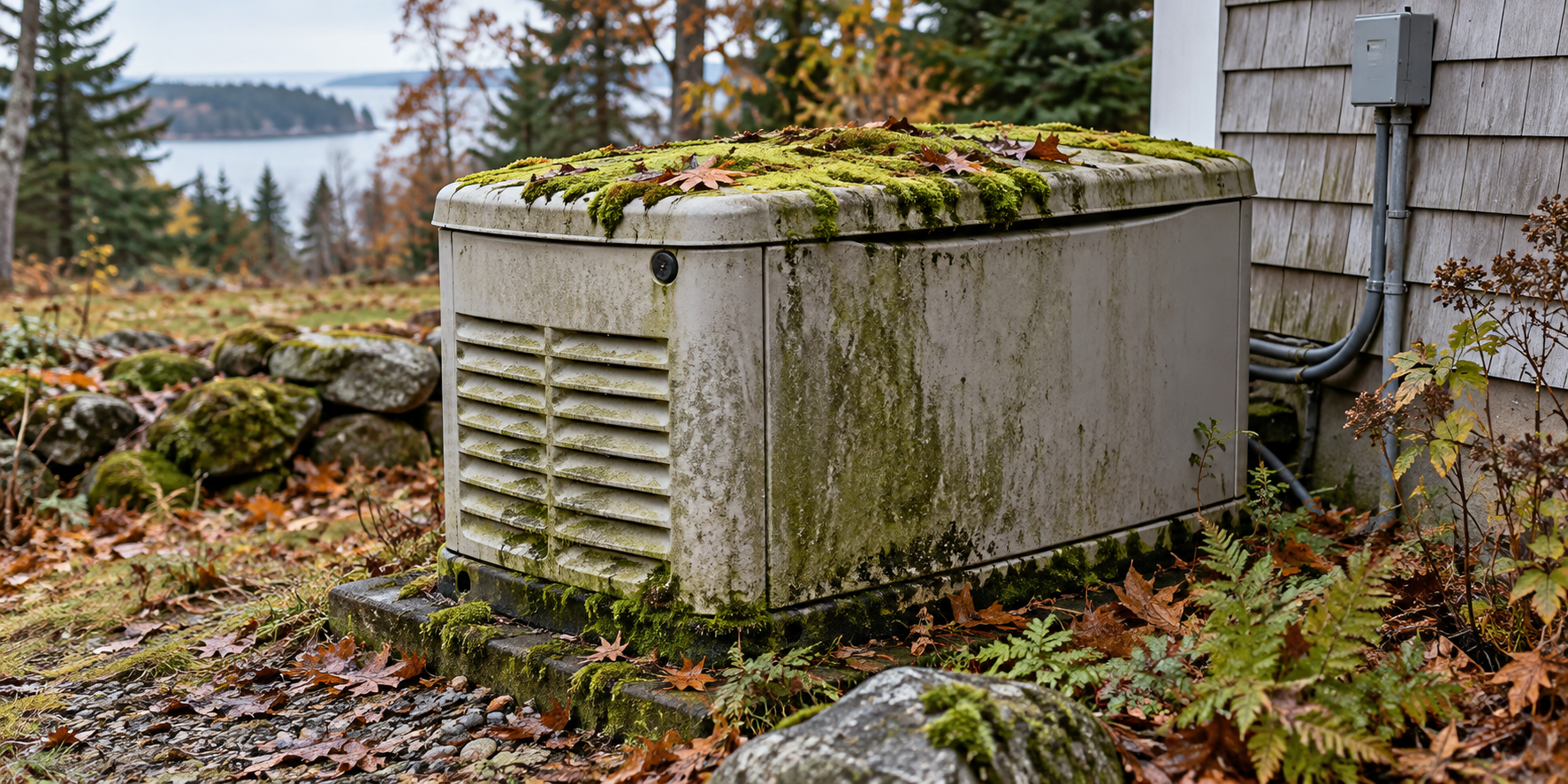
    Unbranded standby generator on a concrete pad outside a cedar-shingle Maine home in autumn

    Hearing the standby generator run on schedule is reassuring. But before another Midcoast Maine heating season, ask a more useful question: when did it last carry the circuits you actually depend on?

    An engine exercise and a test of the complete backup-power system are different things. Knowing which one you have been seeing helps you decide what still needs checking before a real outage.

    A scheduled exercise may leave the house on utility power

    An exercise is a short, scheduled run that starts the generator and checks its operation. On some standby systems, the engine runs while the house stays on utility power. That is an unloaded exercise.

    That run tells you the engine started and ran at that time. If the building stayed on utility power, it did not demonstrate that the transfer equipment and protected circuits could carry you through an outage. A quiet run outside is useful information, but it is not the whole picture.

    Check the model before making assumptions

    Exercise options depend on the generator, controller, transfer equipment, and settings. Some systems exercise without taking the building’s load; others support an exercise that transfers power as well. The important question is what your particular setup is configured to do.

    Check the generator model, controller, transfer-switch model, and your own manuals. A feature on a neighbor’s machine or in a newer advertisement may not be available on yours. Ask your service provider whether your scheduled exercise actually powers the protected circuits.

    What a complete system test should establish

    A planned outage simulation can check whether the system recognizes utility loss, starts automatically, transfers the protected loads, handles those loads, and returns to utility power properly. It is a broader check than an unloaded exercise and can be useful before storm season, after installation, or after repairs that affect those functions.

    Think in terms of useful results: did the heating equipment run, did the well pump deliver water, and did the circuits included in your backup plan operate as intended? For a small business, identify the equipment needed to keep the premises safe and protect stock. Not every circuit is necessarily included in the installation.

    If priorities have changed since installation, revisit the load plan before testing. A newly added heat pump, larger pump, or other equipment should not simply be assumed to fit. Our article on choosing essential generator loads covers that separate planning step.

    Plan the interruption instead of creating a surprise

    Arrange the test with a qualified electrician or generator service provider using the procedure for your equipment. Transfers can briefly interrupt power. Tell everyone affected and make arrangements for medical equipment, computers, business operations, and anything else that cannot tolerate a power interruption.

    Leave meter removal, work inside energized equipment, and transfer-switch mechanisms to qualified professionals. If you cannot identify and safely follow the procedure for your system, have your electrician or generator service provider handle the test.

    Keep a record you can use

    Before the visit: send the generator and transfer-switch model numbers, the last service date if known, and any exact alarm messages. Note whether you have actually seen the building run on generator power or have only heard the exercise cycle.

    After the test: record the date, circuits checked, problems found, corrective work still needed, and the confirmed final ready-for-automatic-operation status. Ask the provider to distinguish a successful test from maintenance that remains due. One successful test is a snapshot of those conditions, not a guarantee of uninterrupted operation in every future storm.

    Get the connection and the plan checked

    Red Sky at Night Electric – Heat Pumps Too! provides generator connections and backup-power installation throughout the Midcoast service area. If you are unsure what your exercise run proves, send us the equipment details so we can discuss the electrical connection and a sensible testing plan, with a generator service provider involved where needed.

    Technical references, checked October 19, 2026: Generac’s guidance on exercise cycles, exercise with and without power transfer, and complete-system testing. These manufacturer examples concern automatic standby equipment; follow the instructions for your exact system.


  • Before the First Hard Freeze: A Midcoast Maine Home Readiness Checklist

    Before the First Hard Freeze: A Midcoast Maine Home Readiness Checklist

    Cold weather has a way of finding the weak spots in a Maine home. A little preparation now can prevent nuisance trips, frozen equipment, expensive service calls, and an uncomfortable house during the first serious outage.

    Need help with this now? Want help checking your heat pumps, electrical system, or generator connection before the first hard freeze? Red Sky can work through the priorities with you. Call 207-801-0526 or request service online.

    Give the heat pump a clear path

    Make sure the outdoor unit is clear of leaves, tall grass, stored materials, and anything else that restricts airflow. Leave room around the coil and above the unit for discharge air. Check that roof runoff will not freeze onto the equipment and that snow can be cleared without burying the unit.

    Clean the indoor filters and run every head in heating mode before you truly need it. Listen for unusual vibration, confirm that the louvers move normally, and make sure each room begins warming. A heat pump that struggles now is not likely to improve when temperatures fall.

    Check the electrical basics

    • Test smoke and carbon-monoxide alarms and replace weak batteries.
    • Look for warm receptacles, flickering lights, buzzing switches, or breakers that trip repeatedly.
    • Keep electric heaters plugged directly into a properly sized wall receptacle—never an extension cord or power strip.
    • Confirm outdoor covers close properly and cords are not pinched in doors or windows.

    A breaker that trips is doing its job. Resetting it repeatedly without finding the cause can turn a warning into a hazard. If a circuit will not stay on, leave it off and have the problem traced.

    Prepare for outages before the wind starts

    Start and test portable generators outdoors, well away from doors, windows, and vents. Check the oil, fuel condition, starting battery, cords, and inlet connection. Never backfeed a home through a receptacle. A listed transfer switch or approved interlock is what keeps utility workers, your equipment, and your family protected.

    Decide in advance which loads matter most: heat, well pump, refrigerator, freezer, lighting, communications, and any medical equipment. Knowing the load priorities makes a smaller generator much more useful and helps prevent overloads.

    Know when to call

    Call for service if you smell hot insulation, see discoloration around electrical equipment, hear persistent buzzing, lose heat from one or more indoor units, or find the generator connection is improvised or uncertain. Those are problems worth addressing before a storm.

    Get the house ready before the weather turns

    Red Sky handles electrical, heat-pump, and backup-power work throughout Waldoboro, Camden, Rockport, Damariscotta, and surrounding Midcoast Maine communities.

  • Portable Generator Safety for Maine Storm Season

    Portable Generator Safety for Maine Storm Season

    A portable generator can keep heat, water, refrigeration, and lights available during a Maine outage. It can also create serious carbon-monoxide, fire, shock, and backfeed hazards when it is placed or connected incorrectly.

    Need help with this now? Need a safe generator inlet, transfer equipment, or help sorting out an uncertain connection? Red Sky can evaluate the setup before the next outage. Call 207-801-0526 or request service online.

    Operate it outdoors and well away from openings

    Never run a generator in a house, basement, garage, enclosed porch, or barn—even with doors open. Exhaust can enter through doors, windows, soffits, and vents. Place the generator outdoors as directed by its manufacturer and point exhaust away from occupied buildings.

    Keep carbon-monoxide alarms ready

    Test alarms before storm season and make sure the household recognizes the signal. Headache, dizziness, weakness, nausea, confusion, or unusual sleepiness can be signs of carbon-monoxide exposure. Move into fresh air and seek emergency help if exposure is suspected.

    Fuel only when the machine has cooled

    Hot engine parts can ignite spilled fuel. Shut the generator down and allow it to cool before refueling. Store fuel in approved containers away from living areas and ignition sources, and rotate stored gasoline so it remains usable.

    Use a proper home connection

    Never connect a generator to a home through a dryer, range, or ordinary receptacle. Backfeeding can energize utility wiring and endanger lineworkers and neighbors. A listed transfer switch or approved interlock provides a controlled method of selecting utility or generator power.

    Manage the load

    Bring essential circuits on in stages and listen for the generator laboring. Heavy motors may require extra power at startup. Keep cords dry, fully uncoiled, protected from damage, and properly rated for the load and conditions.

    If your connection method is uncertain, leave it disconnected and have it evaluated. Red Sky provides generator inlet, interlock, and backup-power planning.

    Make sure the generator can power the house safely

    Red Sky designs and installs practical backup-power connections throughout Waldoboro, Camden, Rockport, Damariscotta, and surrounding Midcoast Maine communities.

  • Choosing Which Loads Your Generator Should Actually Run

    Choosing Which Loads Your Generator Should Actually Run

    The most useful generator is not always the largest one. A clear list of essential loads helps match the equipment to the house, keeps the system manageable, and prevents disappointment during a long Midcoast Maine outage.

    Need help with this now? Need help deciding what a generator should run—or whether equipment you already own is a good fit? Red Sky can build a practical load plan before installation. Call 207-801-0526 or request service online.

    Start with needs, not every circuit

    Most households begin with heat, well pump, refrigerator, freezer, basic lighting, internet or phone charging, and medical equipment. A sump pump or septic pump may also be essential. Write these down before discussing generator size or transfer equipment.

    Running watts are only part of the story

    Motors and compressors can require a brief surge when they start. Well pumps, refrigeration equipment, and some heating equipment therefore need more capacity at startup than their normal running load suggests. Starting several large loads together can overload a generator that otherwise appears large enough on paper.

    Use loads in stages

    A modest generator can be effective when the household follows priorities. The well pump may run while other heavy loads are off. Refrigerators and freezers cycle rather than running continuously. Clear panel labeling and a written sequence help everyone use the system safely when the power is out and conditions are stressful.

    Choose a safe connection method

    A generator must never energize utility lines through improvised backfeeding. A listed transfer switch or approved interlock separates generator power from utility power. The inlet, wiring, overcurrent protection, grounding and bonding arrangement, and generator instructions all need to work together as a system.

    Planning the loads first produces a more useful installation and a clearer estimate. Visit our generator and backup-power page or contact Red Sky to discuss a practical setup.

    Choose the generator around the loads that matter

    Red Sky plans and installs backup-power systems throughout Waldoboro, Camden, Rockport, Damariscotta, and surrounding Midcoast Maine communities.

  • Bought a Used Generator or Heat Pump? Why Contractors Say No—and Why We May Say Yes

    Bought a Used Generator or Heat Pump? Why Contractors Say No—and Why We May Say Yes

    We get this call a lot: “I bought a used—or new-to-me—generator or heat pump, and nobody will install it.” Maybe it is a lightly used standby generator, a mini-split still in its boxes, or equipment removed during a renovation. The price looked good. Then the owner started calling contractors and heard some version of, “We only install equipment we sell.”

    Need help with this now? Already bought a generator or heat pump and need an installer? Send Red Sky the model numbers and photos so we can discuss whether an evaluation makes sense. Call 207-801-0526 or request an equipment evaluation.

    That answer can feel like a sales tactic, especially after the equipment is already sitting in your garage. Often it is a contractor protecting the customer, the company, and a job whose unknowns can multiply quickly. At Red Sky at Night Electric – Heat Pumps Too!, we take a different approach: we are willing to evaluate used, new-to-you, and other customer-supplied generators and heat pumps. If the equipment is safe, compatible, supportable, and sensible for the property, we may be able to install it.

    Why many contractors say no

    When a contractor supplies a generator or heat pump, the equipment, accessories, design, installation, startup, and warranty path are usually one coordinated package. Customer-supplied equipment breaks that chain. The contractor did not choose the model, verify its history, store it, transport it, or confirm that every required part came with it.

    If the system does not work after installation, the customer may understandably see one failed project. The actual cause could be a bad control board, hidden shipping damage, an incorrect indoor-and-outdoor-unit pairing, a missing transfer-switch component, contaminated refrigerant piping, or an installation issue. Sorting responsibility can take longer than the installation itself.

    A bargain is not always a complete system

    A generator is more than the engine and enclosure. The job may require a compatible transfer switch, controls, wiring, overcurrent protection, a suitable fuel supply, correct placement, permits, startup procedures, and load planning. A heat pump needs correctly matched equipment, controls, line-set compatibility, electrical provisions, mounting, drainage, evacuation, commissioning, and manufacturer data.

    Model and serial numbers matter. So do installation manuals, service availability, recalls, discontinued parts, prior operating hours, and signs that equipment has been wet, dropped, cannibalized, or improperly disconnected. We would rather identify those issues before labor and materials are committed.

    Warranty and rebate expectations need to be realistic

    Used or resale equipment may have little or no remaining manufacturer protection. Warranty terms vary by brand and product. For example, Mitsubishi Electric states that resale purchases do not receive its warranty protection and support services. Generac says its home standby warranty transfers between owners at the original installation site, but moving a standby generator to another property compromises that warranty.

    Do not assume a rebate, extended warranty, or promotional financing program will accept equipment purchased secondhand or outside the program’s approved channel. We can help identify the questions, but the manufacturer or program administrator makes the final eligibility decision.

    Why Red Sky may still take the job

    Good equipment does not become useless merely because it changed hands. Sometimes a homeowner has found a sensible unit, inherited nearly new equipment, or needs a practical solution that does not fit a dealer’s standard sales package. We are willing to look at the actual job instead of rejecting it by policy.

    That is not a promise to install everything brought to us. It is a promise to give the equipment a fair technical evaluation. If it is appropriate, complete, supportable, and capable of being installed safely and legally, we can discuss a path forward.

    What our evaluation may include

    • Exact model and serial numbers for every major component
    • Photos, purchase information, operating hours, and known service history
    • Compatibility between equipment, controls, transfer equipment, or indoor and outdoor units
    • Condition of coils, connections, wiring compartments, cabinets, and included accessories
    • Availability of installation manuals, replacement parts, and technical support
    • Electrical load, breaker, conductor, disconnect, grounding, and service-capacity requirements
    • Fuel, refrigerant, drainage, placement, clearance, and permitting considerations

    Maine requires electrical work to follow the applicable permitting and inspection process. The state’s Electrical Permit guidance explains that electrical equipment generally may not be installed or altered before the proper permit is obtained, subject to the stated exceptions and local jurisdiction.

    The terms will be different from a new-equipment package

    With customer-supplied equipment, labor, added materials, diagnosis, and return trips are normally separate from the equipment itself. We cannot provide a manufacturer’s warranty the manufacturer does not offer, and we cannot absorb the cost of a pre-existing defect as though we sold a complete new system.

    There may also be a paid evaluation before we quote installation. That protects both sides: you learn what you actually bought, and we avoid pretending that an unknown machine can be priced like a known package.

    Already bought it? Send us the details

    If you already own the equipment, send clear photos of every data plate, all included components, any visible damage, and the seller’s description. Tell us where it came from, whether you have seen it operate, why it was removed, and where you want it installed. If you have not bought it yet, send those details before money changes hands—we may be able to flag a mismatch or missing piece before a bargain becomes an expensive project.

    For related services, see our generator and backup-power installation and heat-pump installation pages. If you’re in Waldoboro, Camden, Rockport, Damariscotta, or the surrounding Midcoast area, give us a call—or contact Red Sky at Night Electric – Heat Pumps Too! with the model numbers and photos.

    Manufacturer and Maine permitting references checked August 15, 2026. Acceptance of customer-supplied equipment is case-specific and subject to inspection, code requirements, parts availability, and a written scope of work.

    Have the equipment? Let’s look at the job.

    Send model numbers, equipment photos, and the installation address. Red Sky evaluates customer-supplied generators and heat pumps in Waldoboro, Camden, Rockport, Damariscotta, and surrounding Midcoast Maine communities. Installation depends on condition, compatibility, and a safe, practical plan.